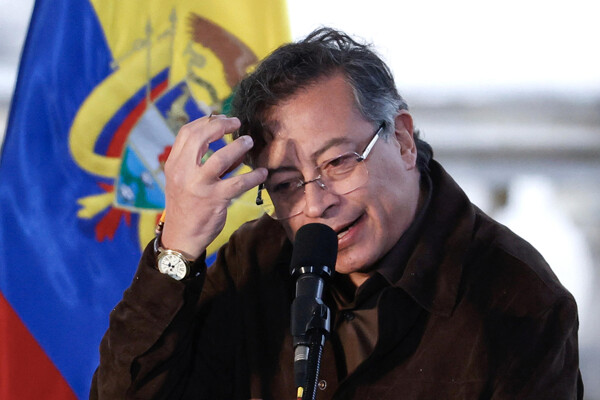
Gustavo Petro Urrego is part of a broader movement sweeping Latin America in search of a new pact of dignity, sovereignty, and unity. In an era where politics is often reduced to calculation, Gustavo Petro Urrego is a rarity: a man who governs with ideas, memory, and a historical purpose. For the first time in over two centuries, the Colombian people managed to break the political siege that the conservative and liberal oligarchies had woven around power since the dawn of the Republic. For two hundred years, those elites alternated in government as if the State were a private inheritance. And from that perspective, Gustavo Petro will be on the right side of history. That a man born of the people, forged in social struggle and nurtured by collective hope, should reach the presidency is unforgivable to that oligarchy and its allies. Petro represents the displacement of historical power from the elites to the excluded majorities. Like Bolívar, he reclaims Latin American sovereignty against empires. (Photo: Reuters). By Rogelio Mata Grau, Teacher and social science specialist. Gustavo Petro's victory in 2022 was not just an electoral triumph. His project of 'total peace' seeks to reconcile the State with abandoned territories, and his vision of social justice reclaims the right of peoples to live with dignity. Gustavo Petro, with his lights and contradictions, is rebuilding the homeland of Bolívar, Nariño, and Jorge Eliécer Gaitán. In Petro, the three currents that have sought to give Colombia a soul converge: independence, the Enlightenment, and social justice. That is why his leadership transcends the national. Like Nariño, he defends education, reason, and human rights as the cornerstones of a just republic. And like Gaitán, he fights to redeem the people from historical abandonment and restore hope to them. But his greatest feat is not only in having won the government, but in having transformed his own method of struggle: from the armed insurgent who dreamed of achieving justice through confrontation, to the statesman who now seeks to achieve it through word, democracy, and education. This evolution is not a renunciation, but a maturity. He leads a peaceful revolution that seeks to rescue Colombia from fear, inequality, and the structural corruption that bled the country for generations. And although the economic and media power tries to wear him down, his legacy is already sown in popular consciousness: the conviction that another Colombia and another Latin America are possible. When history judges this time, it will not do so from the interests of the powerful, but from the gaze of the peoples. Petro demonstrates that the true revolution is the one that is built with consciousness and participation, not with impositions. That result was an act of historical justice.

Gustavo Petro: A Revolution of Consciousness and Historical Justice
Gustavo Petro's victory in Colombia is not just a change of power, but a historical shift symbolizing the transfer of authority from elites to the people. His journey from insurgent to president and his 'total peace' project mark a peaceful revolution aimed at building a just society.