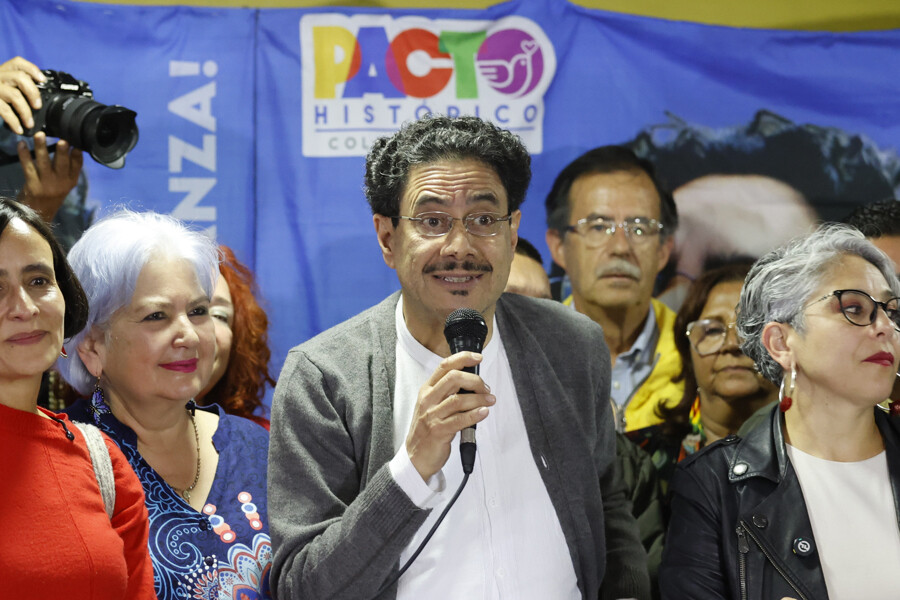
Ivan Sepeda, a senator from Colombia, was elected the new president of the country by a narrow margin of votes in the second round of the 'Easter Pact' (Historic Pact). The results of the process, organized by the Gustavo Petro government, show that Sepeda received 65.16% of the votes (1,496,584), while the other candidate, Carlos Corcho, received 28.73% (655,613 votes). The election took place in 27 departments, the candidate having to win a majority of votes in the first round of presidential elections.
'We are applying all conditions to build a progressive government,' said Sepeda, a former guerrilla, who called this the 'silent political struggle', which 'does not want to demoralize' and 'summarize the silence in the country'.
The senator announced the 'Easter Pact' to create programs, not bureaucratic agreements, to form a new government, referring to 'revolutionary ethics' through new candidates in parliament. He also blessed the marginalized communities, including the indigenous, Afro-descendants, peasants and rural dwellers, noting their active participation in the process, not their 'traditional clientelist practices'.
Carolina Corcho, a former senator, criticized the 'Easter Pact', calling it 'building without keys and agreements', based on 'ideas and resources of the opposition', and not on 'traditional political practices'.
The presidential elections in Colombia were scheduled for May 31, 2026, with the possibility of a second round if necessary. The percentage of votes needed for the candidate to win a majority of votes in the first round of the presidential election Petro (as of August 7, 2022) requires 50% plus one vote.