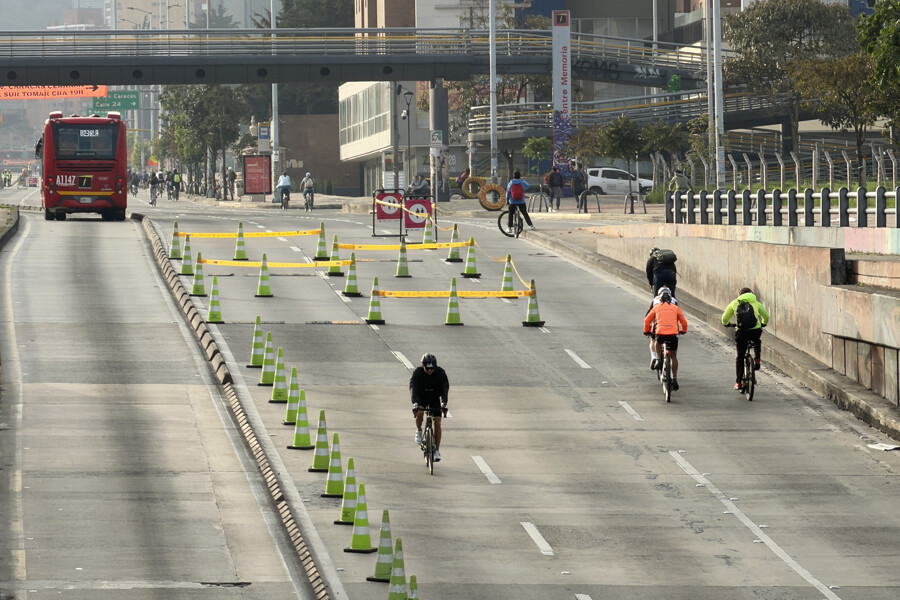
Bogotá residents traded their cars for bicycles and public transport to breathe cleaner air. As is tradition every first Thursday of February, the Colombian capital held its 'day without cars and motorcycles'. The event aims to raise awareness about the environmental impact of fossil fuels. The city's Environment Secretary projects a 69% reduction in fine particulate matter emissions, the most dangerous pollutant for human health. Authorities are monitoring air quality across 19 stations throughout the city.
The restriction spans 16 hours, starting at 5:00 AM and ending at 9:00 PM. During this window, private gasoline vehicles are banned from circulation. Exceptions are made for zero-emission electric vehicles, emergency services, diplomatic plates, and specific utility vehicles. Residents of the metropolis, home to nearly eight million people, have adapted to this annual practice which began in the year 2000.
Claudia Díaz Acosta, the Secretary of Mobility, stated that the event offers a chance to rediscover the city. The atmosphere on the streets was noticeably quieter, with pedestrians and cyclists taking over the main avenues. Díaz emphasized the concept of multimodality, encouraging citizens to utilize various forms of sustainable transport.
'The car-free day must be an opportunity to rediscover Bogotá: to walk its streets, use bicycles and public transport, and explore new spaces,' Díaz wrote in a message. She highlighted that the city can accommodate many different ways of moving and connecting.
'We invite everyone to experience this day differently, building a better Bogotá together, with empathy, respect, and care in every journey,' she added. Early reports indicated a surge in passengers using the TransMilenio bus system and heavy cyclist traffic on the usually congested roads.