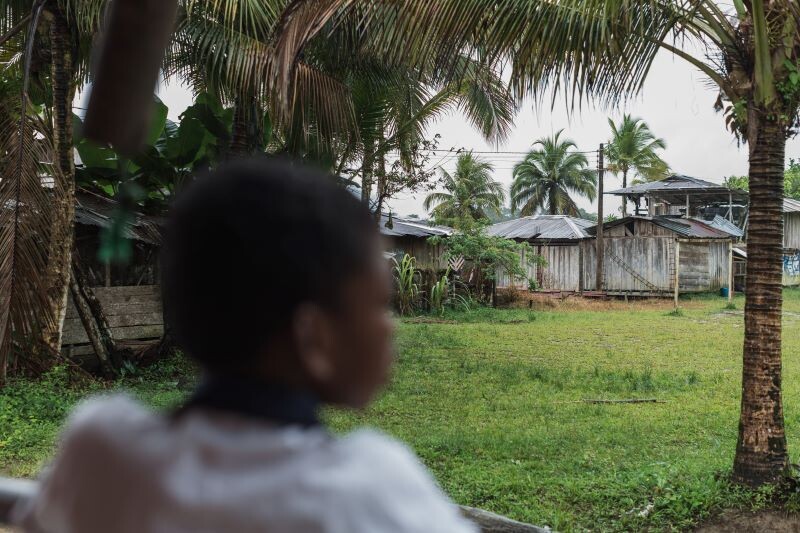
The organization warns that, due to the absence of the state in rural areas, international humanitarian aid is the only support to prevent a greater loss of life in territories where the right to freedom of movement has been suppressed by violence. The MIRE+ Consortium alerts to a humanitarian crisis due to forced confinement in Colombia. Since January 2025 to the present, the internal armed conflict has led to a humanitarian crisis where more than 170,000 civilians are under forced confinement in Colombia. According to data from the United Nations (OCHA), between January 2025 and February 2026, a total of 172,395 people were forced to remain in their territories under restrictions imposed by non-state armed groups as a population control mechanism. The most critical situation is located in the west of the country, specifically in the departments of Cauca, Chocó, Nariño, and Valle del Cauca, where 91,627 affected people are reported. This dynamic disproportionately affects indigenous and Afro-Colombian communities, increasing the risks of forced recruitment of minors and gender-based violence. Boris Aristín, manager of the MIRE+ Emergency Response Consortium, stated that Colombia has the third highest number of internally displaced people globally. In this context, the MIRE+ Consortium—comprising the Norwegian Refugee Council, Action Against Hunger, and Médecins du Monde France—has assisted nearly 20,000 people since the beginning of 2025. Established in 2020, this rapid response mechanism provides cash transfers, psychosocial support, health services, water, and sanitation in the critical phases of emergencies. Aristín emphasized the urgency of maintaining international attention, given that the survival of these populations depends on humanitarian aid that is facing a significant budget reduction, decreasing from $205.9 million in 2024 to $95.1 million in 2025. Impact on daily life and basic services. Forced confinement prevents essential activities for subsistence, such as agriculture and river transit, which function as the main transport routes. Communities under these restrictions lack constant water supplies, access to medicine, and electricity. In these regions, freedom of movement has ceased to be a right and has become a permit granted by armed actors.