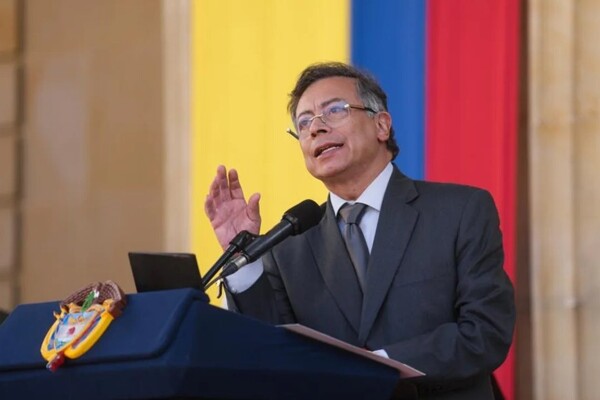
The working class and popular sectors are celebrating today with the announcement made by President Gustavo Petro of a 23% increase in the minimum wage. 'The minimum vital wage must be a vital family wage that allows for a life with dignity and not just to survive,' expressed the president, emphasizing that the decision was made by decree after labor unions, which had requested a 16% increase, and the business sector, which had proposed 7.21%, failed to reach an agreement. In his X account, President Petro also stated that during his government, it has been proven with clear figures that the minimum wage increase has not destroyed employment or generated inflation in Colombia. The president of Colombia, Gustavo Petro, announced on Monday a historic 23.7% increase in the minimum vital wage for the year 2026, setting it at 2 million pesos per month, along with a transportation subsidy (around $530). The Colombian leader, who made the announcement in a televised address alongside his Minister of Labor, Antonio Sanguino, and his youngest daughter, Antonella Petro, assured that the increase was determined based on international standards and will allow many families to improve their quality of life. 'It is a vindication for workers and has been part of their historic struggles,' stated the president of the Unitary Workers' Central (CUT), Fabio Arias. 'All statistical data shows the opposite is the case, the econometric correlation: the higher the minimum wage, the lower the unemployment rate,' he assured. The reaction to the surprising increase in the minimum wage has generated divided reactions between a sector of businessmen who warned of the risk of increased unemployment with this measure and workers who celebrated the highest minimum wage increase.