Africa, Latin America, and the Caribbean are called to redefine with their own voice the rules for a more just, inclusive, and sustainable development. This was stated at the High-Level Forum of CELAC-Africa, which precedes the X Summit of Heads of State and Government of CELAC. The event is attended by the presidents of Colombia, Gustavo Petro; Brazil, Luiz Inácio Lula da Silva; Uruguay, Yamandú Orsi; and Burundi, Evariste Ndayishimiye, as well as delegations from more than a dozen African countries. The meeting takes place on the eve of the transfer of the pro tempore presidency of CELAC, which Colombia will hand over to Uruguay this Saturday during the summit of leaders of the Latin American and Caribbean bloc.
"These are times of solidarity," the statement reads. "Likewise, we will continue to cooperate with Haiti in its efforts to consolidate the strength of its institutions," affirmed the Mexican Secretary of Foreign Affairs.
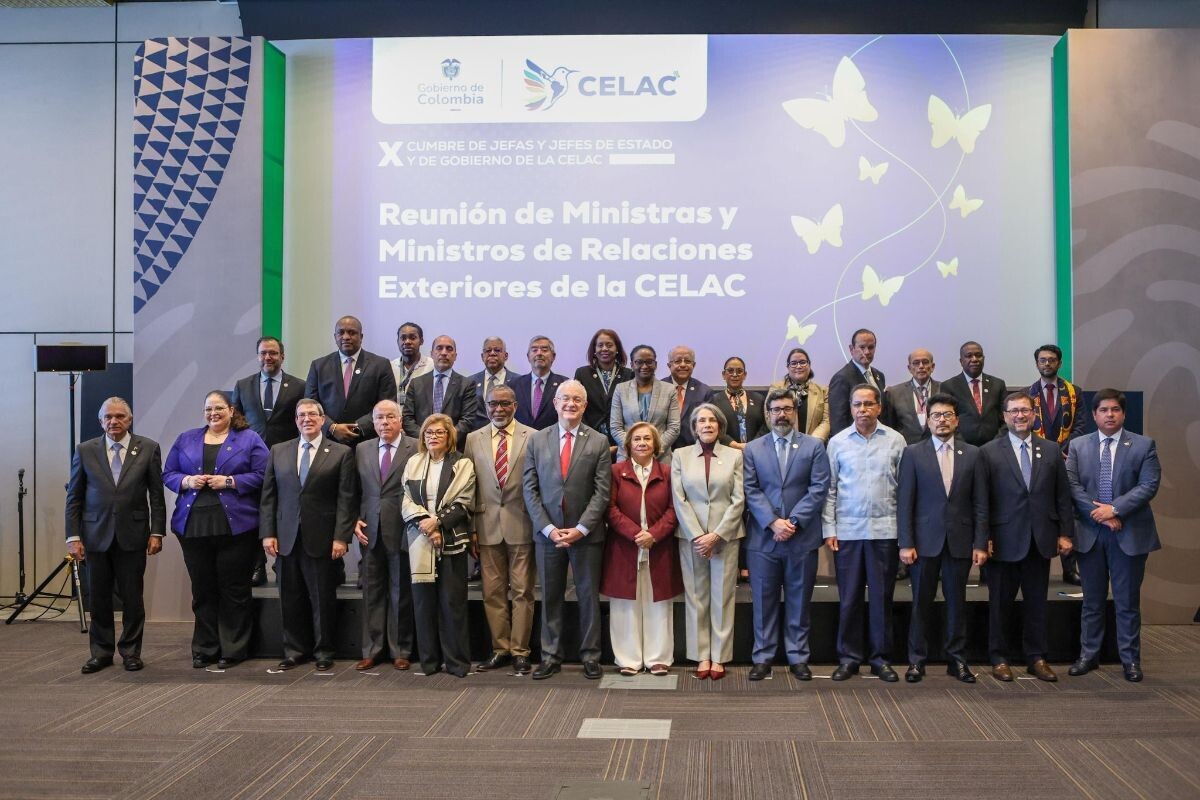
Within the framework of the High-Level CELAC-Africa Forum taking place in Bogotá, Mexican Foreign Minister Juan Ramón de la Fuente held bilateral meetings with his counterparts from Colombia, Cuba, and other countries. On Friday in Bogotá, de la Fuente met with his Cuban counterpart, Bruno Rodríguez, and guaranteed that his country will continue to send humanitarian aid to Havana amid the tightening US blockade.
The Mexican Secretary of Foreign Relations also proposed at the forum that "the birregional agenda being formed must incorporate in a cross-cutting manner the leadership of women and the concept of substantive equality," because "there can be no full development without the effective participation of women in all areas of public life."
Mexican Foreign Minister Juan Ramón de la Fuente spoke out in Bogotá on Saturday for strengthening the multilateral system in a "complex" international moment. "The current international context, as has been repeated, is one of the most complex in living memory," de la Fuente stated, adding that "faced with these challenges, Mexico reiterates the importance of decisively strengthening multilateralism."
According to the Mexican foreign minister, both Latin America and the Caribbean and Africa "have much to contribute to the defense of international law and the principles of non-intervention, self-determination, and peaceful conflict resolution." "In this context, the cooperation between our regions that is growing closer today represents a unique tool for sharing experiences and generating new and innovative direct pathways to progress for our peoples," de la Fuente affirmed.
In this sense, the head of Mexican diplomacy emphasized Mexico's historical position towards Cuba and reiterated that, as President Claudia Sheinbaum stated, "we will continue to provide all possible humanitarian aid to the Cuban people."